Someone took tons of empty spirit alcohol bottles and made them into one giant bottle. Quite the hobby!
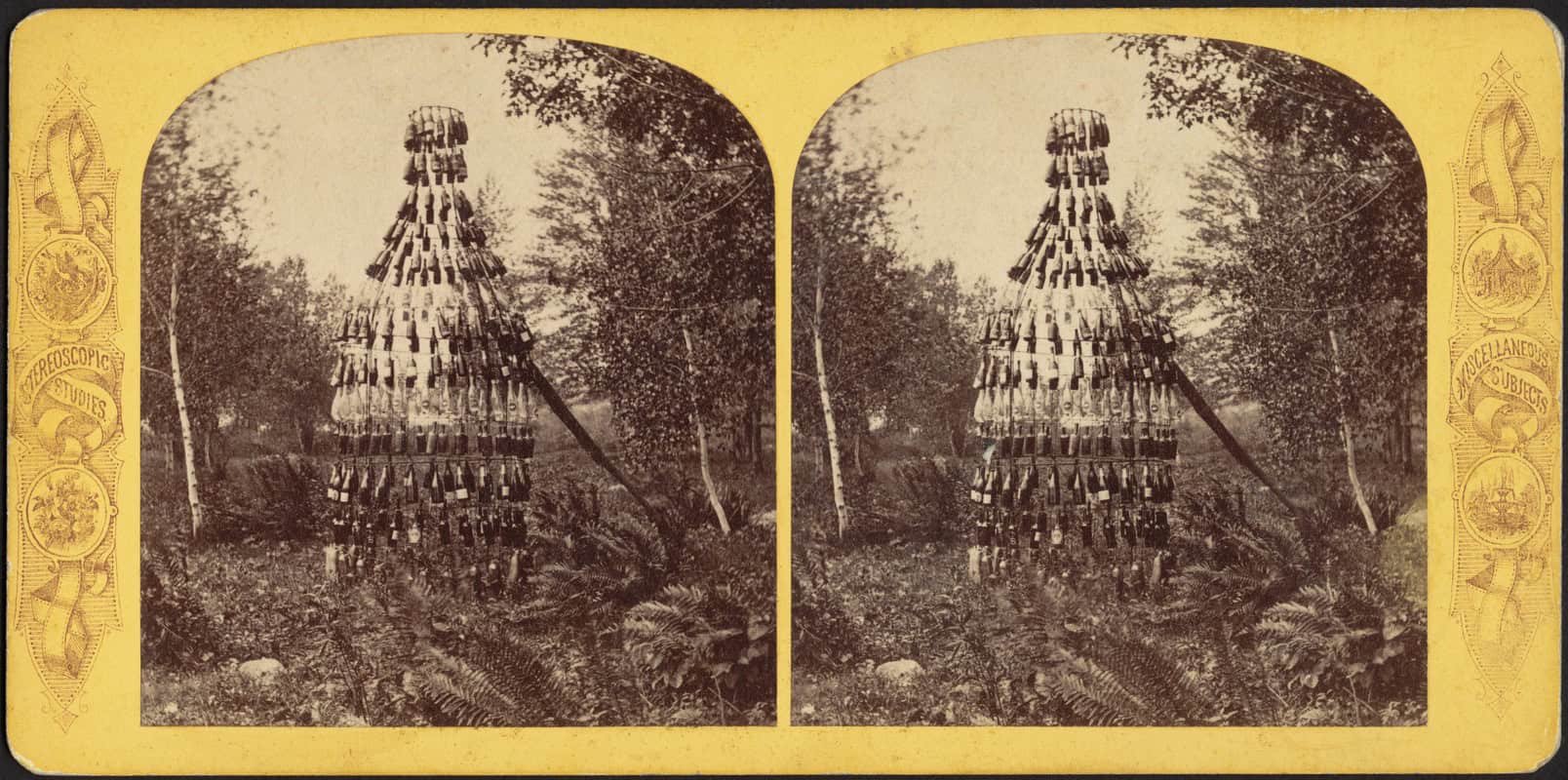
Source: “Monument to departed Spirits, Ridge Hill Farms, Wellesley, Mass.” By Zacharie Le Rouzic, Digital Commonwealth – Public Domain

History's Odds and Ends
Someone took tons of empty spirit alcohol bottles and made them into one giant bottle. Quite the hobby!
Source: “Monument to departed Spirits, Ridge Hill Farms, Wellesley, Mass.” By Zacharie Le Rouzic, Digital Commonwealth – Public Domain
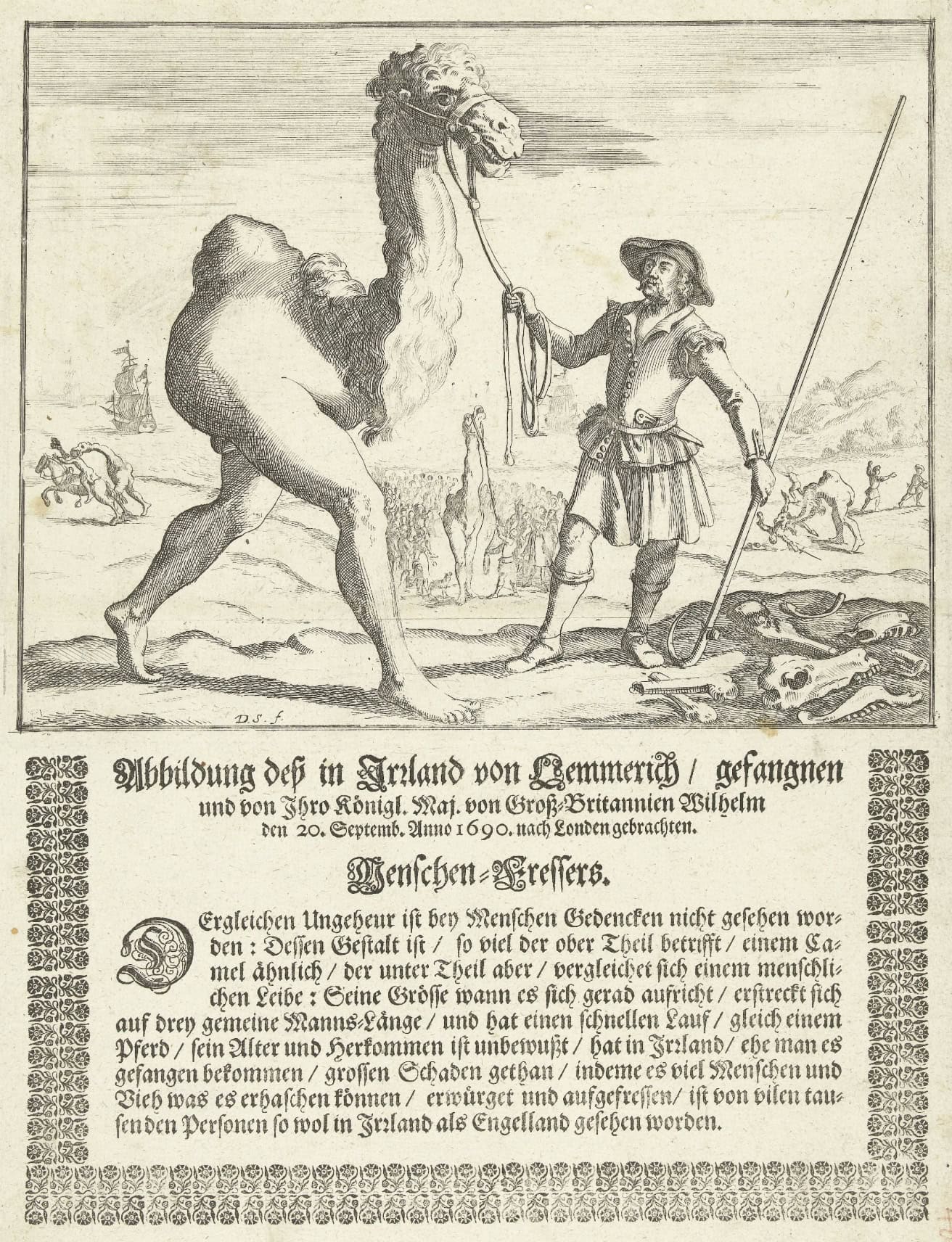
On exactly September 20th, 1690, these monsters were captured by King William the Third’s troops and taken to London. The camel men were said to be from Limerick Ireland.
Not only do these camel men have glorious legs as shown in the drawing, but they also have an insatiable appetite for humans.
Such a random and specific lie. Did the king think this would impress people? What did he gain by creating a sexy legged camel men myth!?
Source: “Monstrous camel-man” (1690) by an unknown artist. Credit: Rijksmuseum, public domain.
These are patients at the Saki Sanatorium in Yevpatoria, Russia, taking mud baths. Mud therapy has been around for centuries, and even animals do something similar, called wallowing.
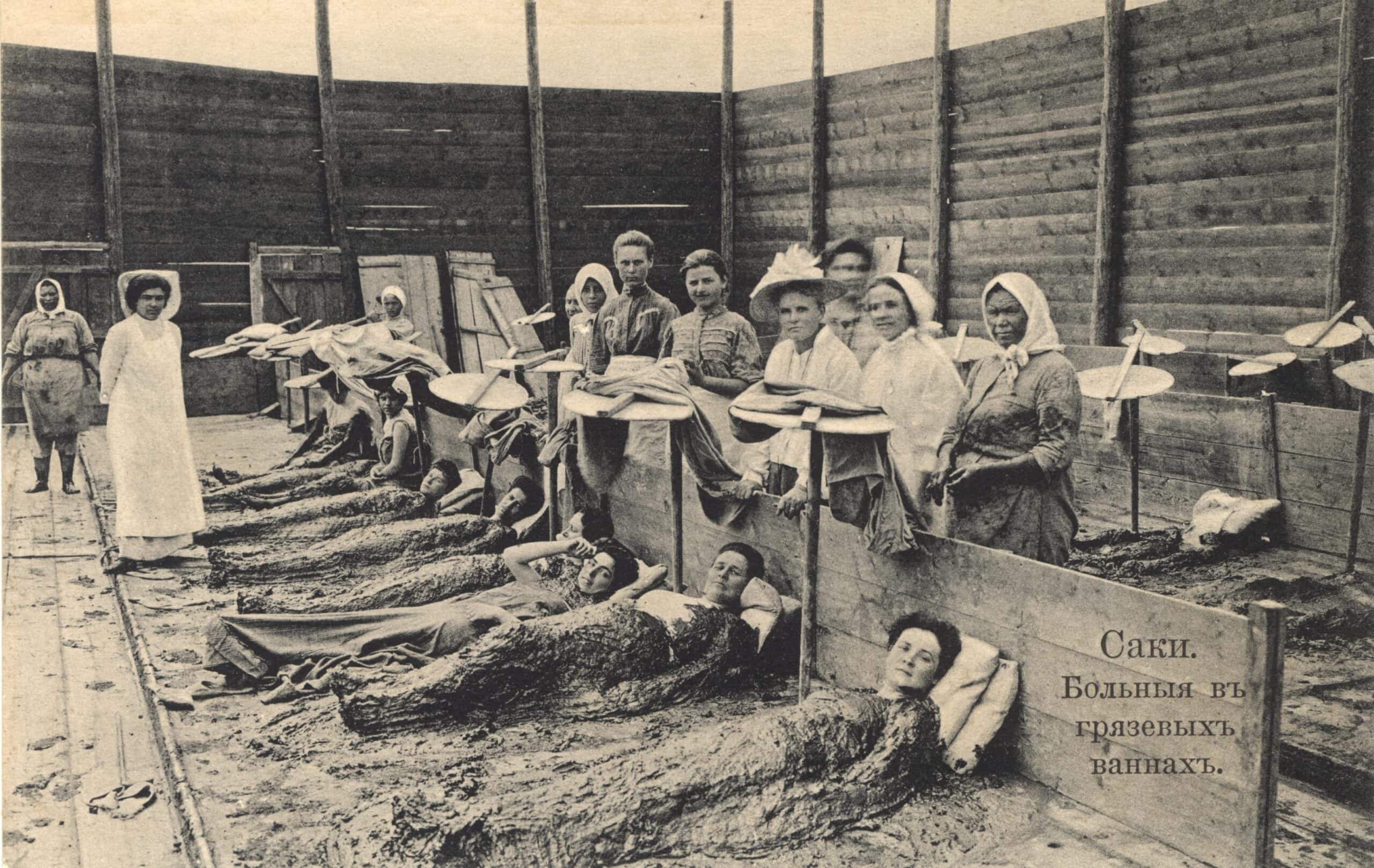
The text on the photo is as follows:
“Саки.
Больныя въ
грязевыхъ
Ваннахъ.”
Translated from Russian to English – “Saki. Patients in mud baths.”
Source: “Mud baths at Saki” (1920s) by an unknown photographer. Credit: National Library of Medicine, public domain.
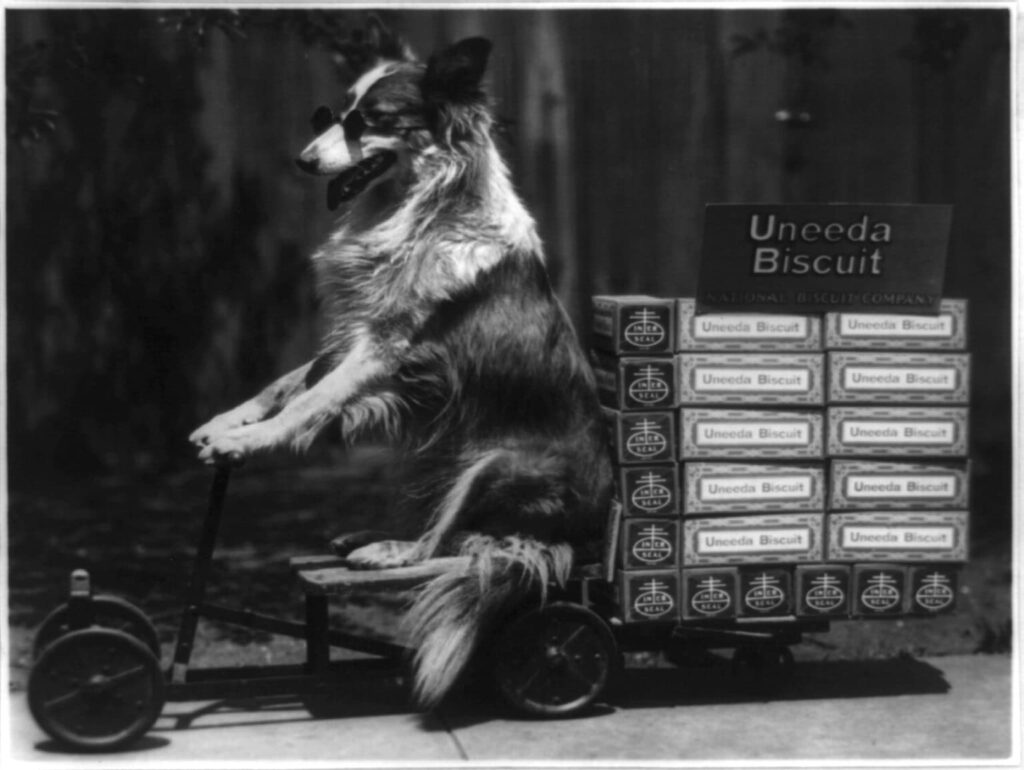
Source: “Collie’s Special Delivery” (1916) by Dr. E. W. Smith. Credit: Library of Congress, public domain.
In 1898, the ambitious Adolphus Green cofounded the National Biscuit Company. He had a vision to rid the world of disgusting cracker barrels.[2]
Before Uneeda Biscuits, you would have to reach into a community-manhandled barrel of crackers. If you were lucky you got some off the top – still fresh and delicious. If you weren’t, you got mushy bits at the bottom. Apparently, like most people, Adolphus Green did not like soggy contaminated food. He helped patent the “In-Er-Seal” technology! [1]
Now your favorite delicious flaky snack was wrapped in wax paper and placed in cardboard. Fresh, dry, and endorsed by a sunglassed dog. Uneeda Biscuits had such innovative packaging that it changed the food industry. It inspired other companies to deliver nicely protected food packs to stores for consumers rather than troublesome bulk free-for-all bundles. This made the food quality higher and the products easier to transport! [3]
So, what seemed like a silly cute dog photo was the harbinger of doom for cracker barrels worldwide. Nice.
[1] American Profile (1982) by Edward Wagenknecht
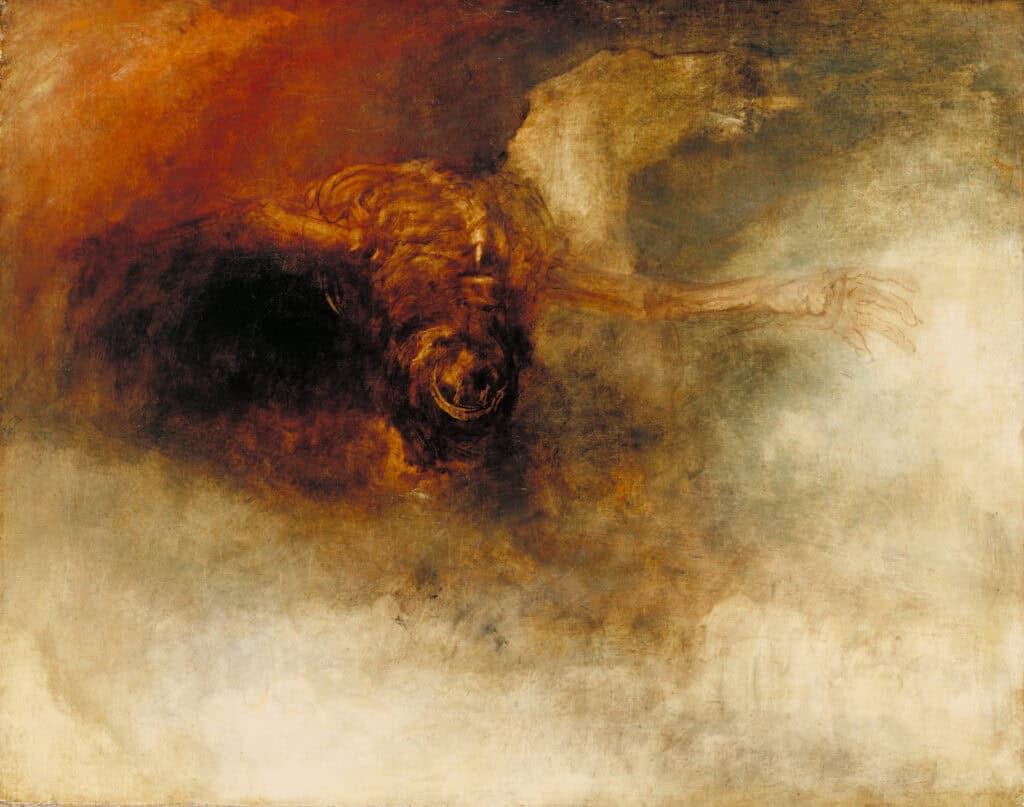
Art By J. M. W. Turner, Tate Britain – Public Domain
