Oddical Home Page

Tag: 20th Century

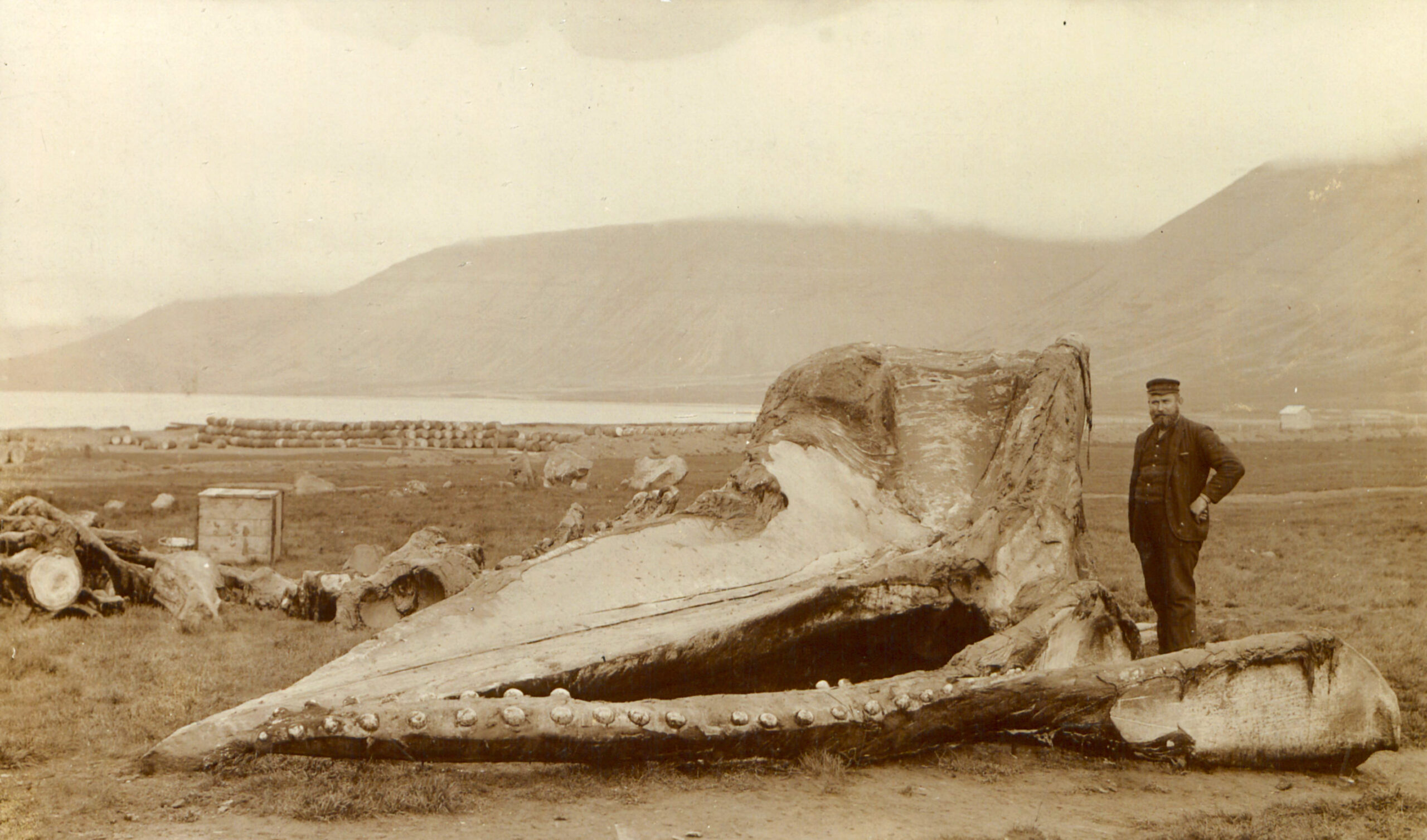
  • A Sperm Whale Skull

    This photo was taken by Daniel Bruun somewhere in Iceland, circa 1900. Daniel Bruun (1856-1931) was a Danish topographer, whom I can imagine was casually surveying the coast only to stumble upon this rarity. Selfie of a lifetime.

    A man next to a sperm whale skull.
    Sperm Whale Skull circa 1900 by Daniel Bruun, Nationalmuseet. CC BY-SA 3.0

    Did you know?…

    The famous Moby Dick was based on a real albino sperm whale named Mocha Dick. As for his name, Mocha was first sighted off Mocha Island, Chile. The Dick part was just a common name at the time. It would be like saying Mocha Bob. Dick just so happens to be less common nowadays – and more comical. [1]

    Vive Mocha Dick” (1849) – The Knickerbocker

    Sources

    [1] “On ‘Mocha Dick,’ the White Whale of the Pacific that influenced Herman Melville.” by Literary Hub

  • Mud Therapy & Forced Relaxation

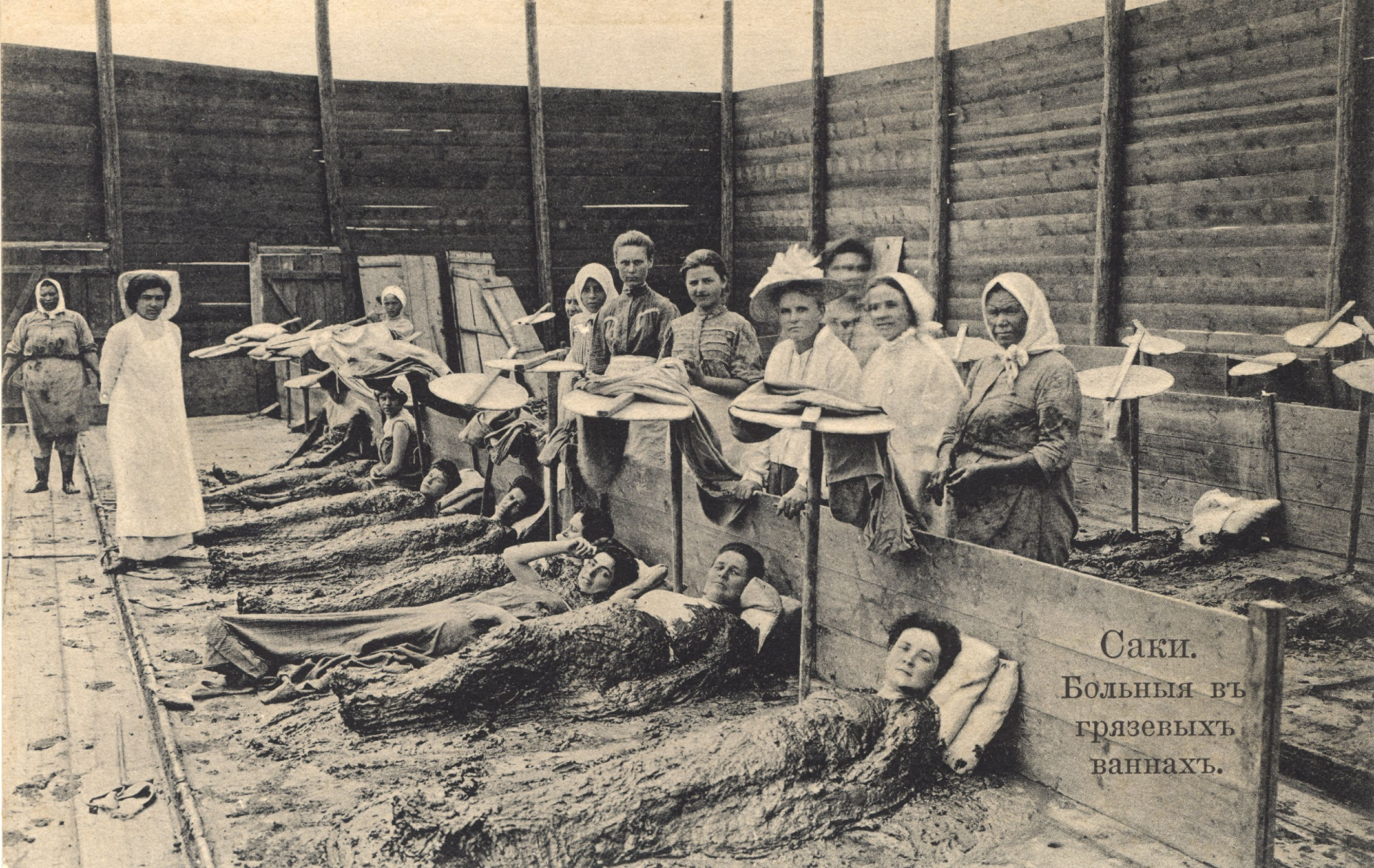
    Woman laying on the ground in mud.
    Mud baths at Saki circa 1920 – National Library of Medicine. Public Domain.

    Translated: “Saki. Patients in mud baths”.

    This photo was taken at the Saki Sanatorium in Evpatoria, Russia. It is dated circa 1920, which makes it one of the Soviet Union’s many workers’ spas. This is a place where hardworking citizens were required encouraged to rest as part of the 1922 Labor Code. [1]

    The visitors could expect various spa treatments at no cost, but they were not allowed to drink, dance, or be loud. [2] Bummer.

    Sources

    [1] Holidays in Soviet Sanatoriums: the weird and wonderful wellness palaces of the USSR, New East Digital Archive.

    [2] On Vacation In Soviet-Era Sanatoriums, Atlas Obscura.

  • Circus Frans Mikkenie

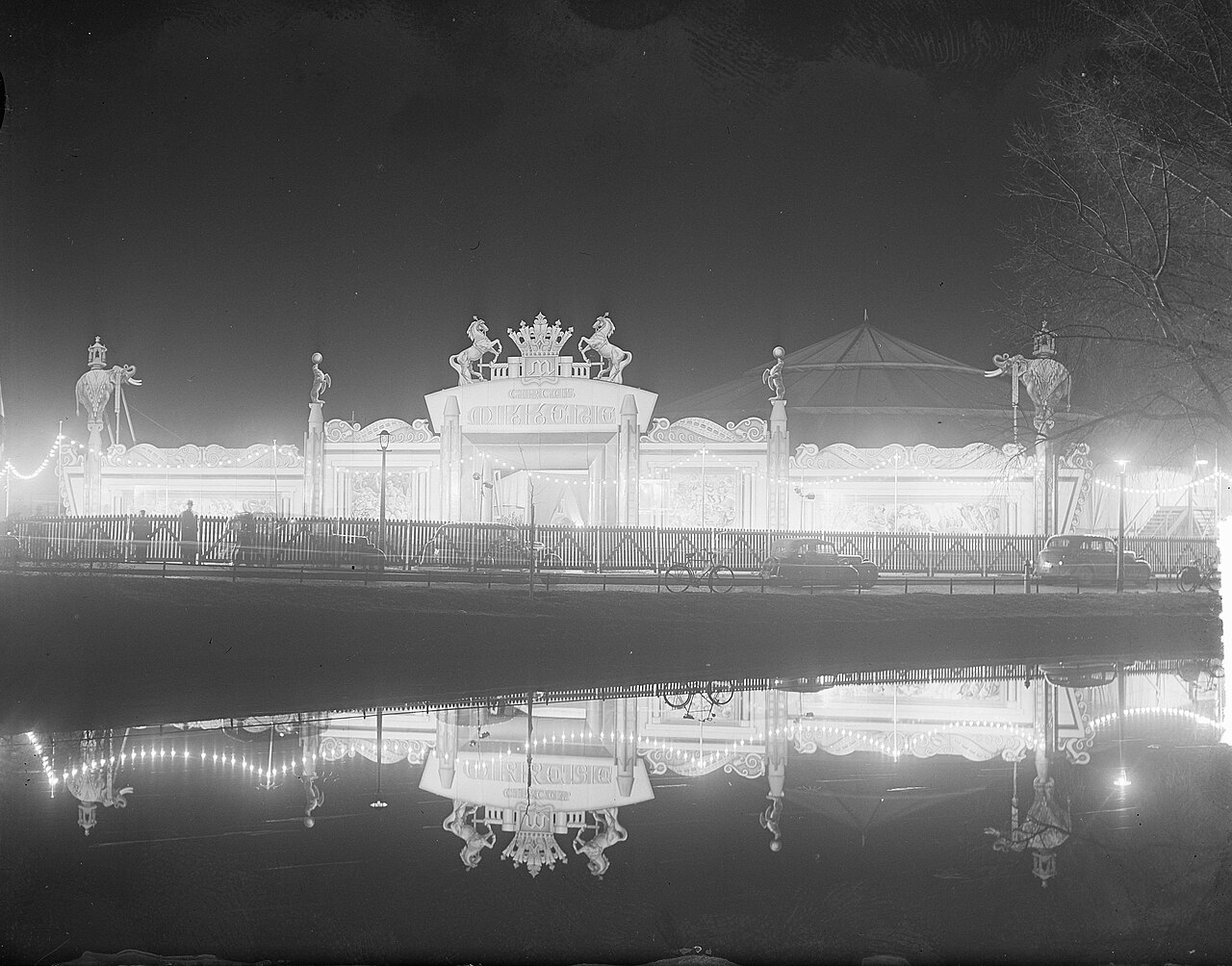
    Between 1948 and 1954, the Circus Frans Mikkenie was the largest of its kind in the Netherlands. There were tons of animal performers; in fact, they were well known for their horses, but I will refrain from sharing any – for ethical reasons.

    The exterior of a glowing circus tent.
    Exterior Tent in the evening” (1948) by Joop Van Bilsen
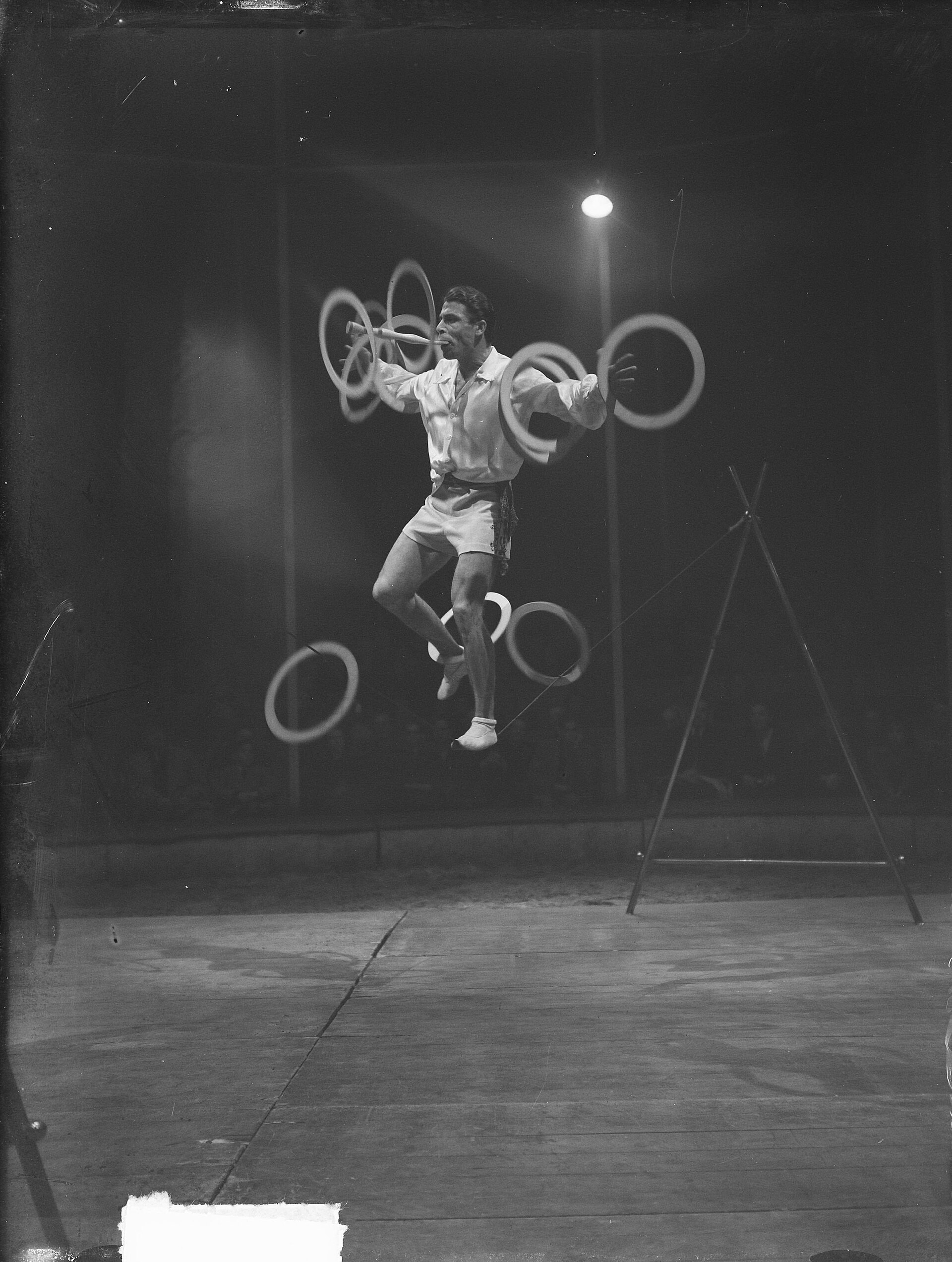
    A man balancing on a rope, spinning round items on his arms.
    Juggler on a slack rope” (1948) by Joop Van Bilsen
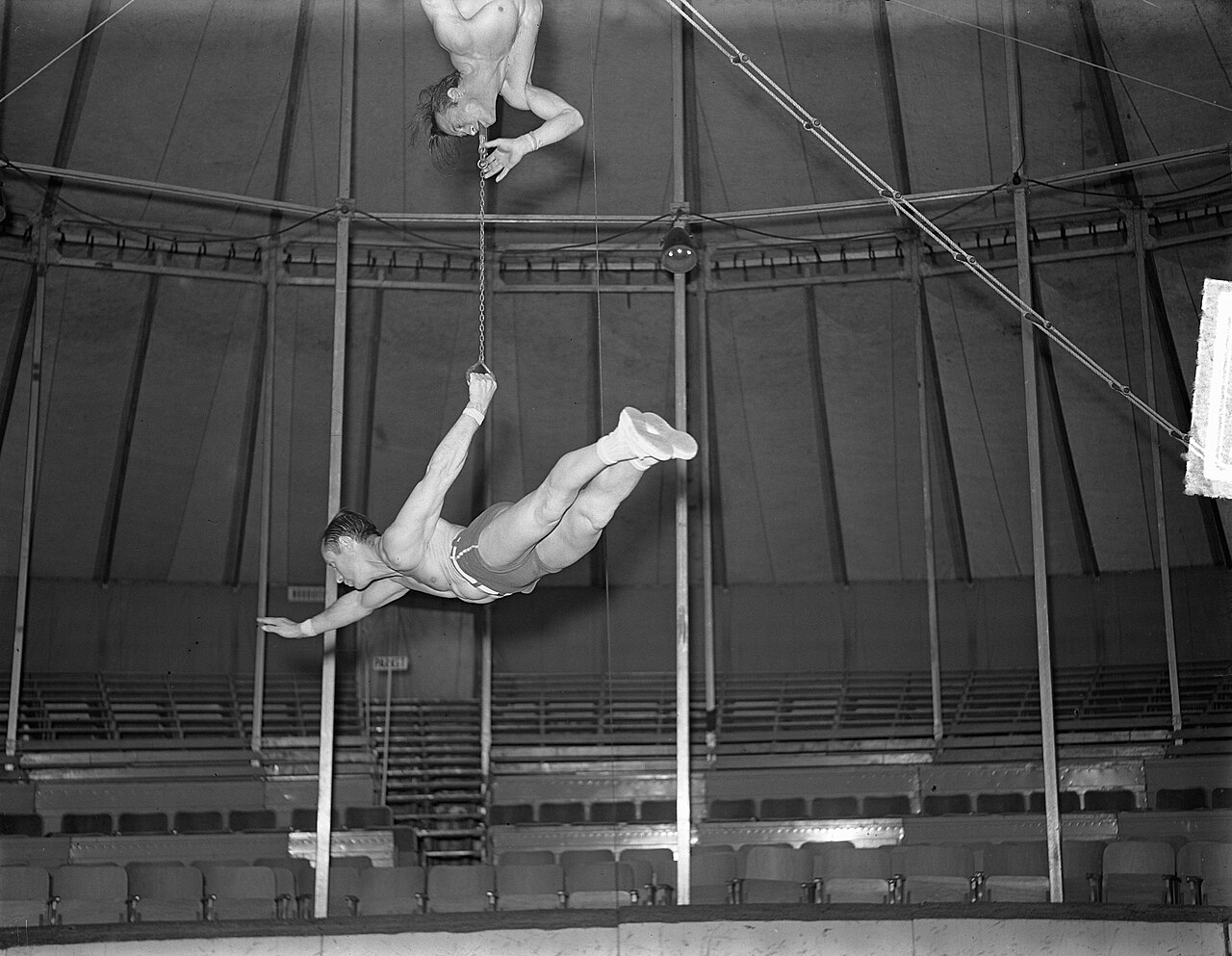
    A man holding a chain in his mouth, another man dangling from the chain.
    Acrobats (1948) by Joop Van Bilsen
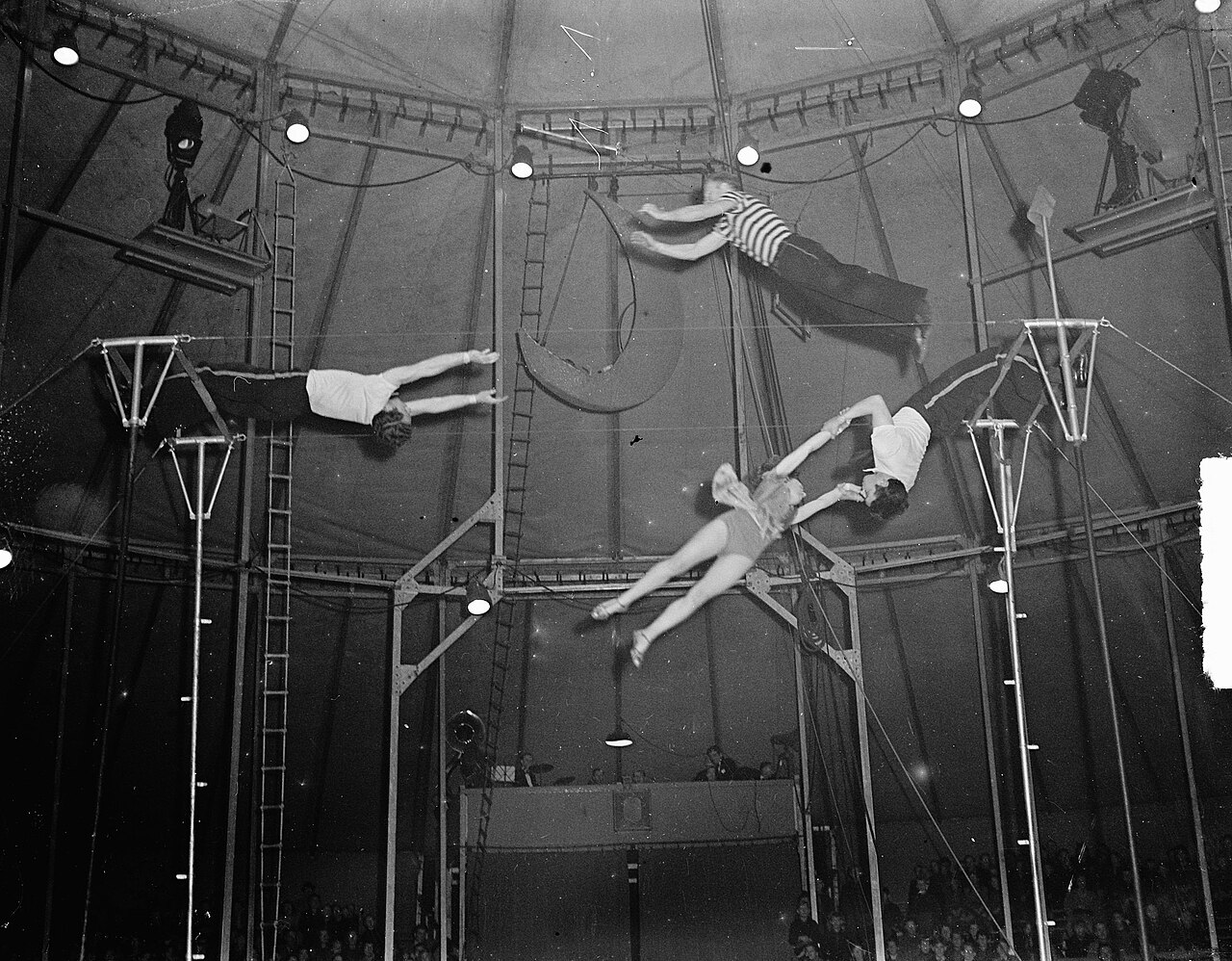
    Four acrobats midair in a performance.
    The ‘4 Airways’ and acrobat team (1948) by Daan Noske
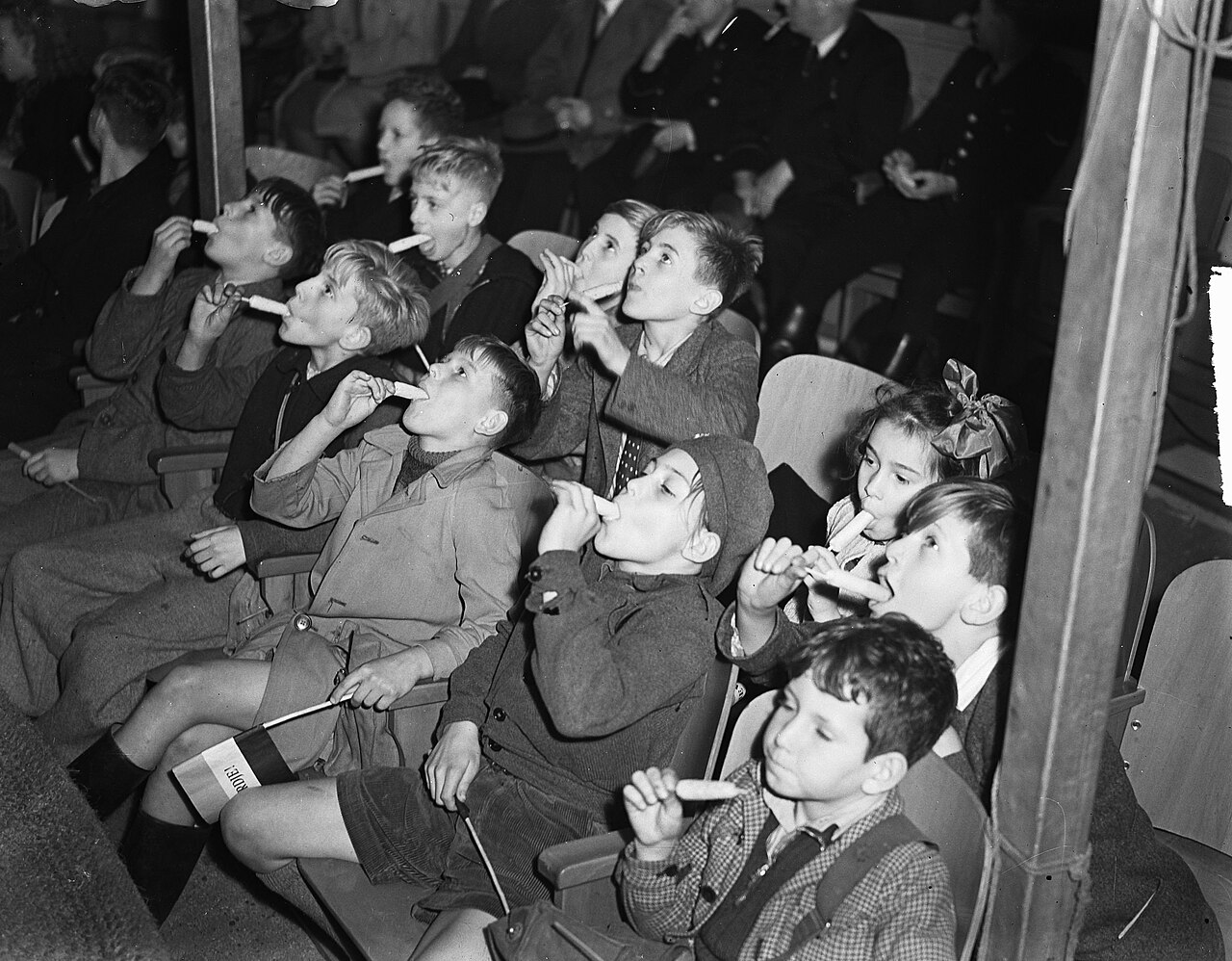
    A crowd of children watching a show while eating a snack.
    Kids enjoying the show (1948) by Daan Noske
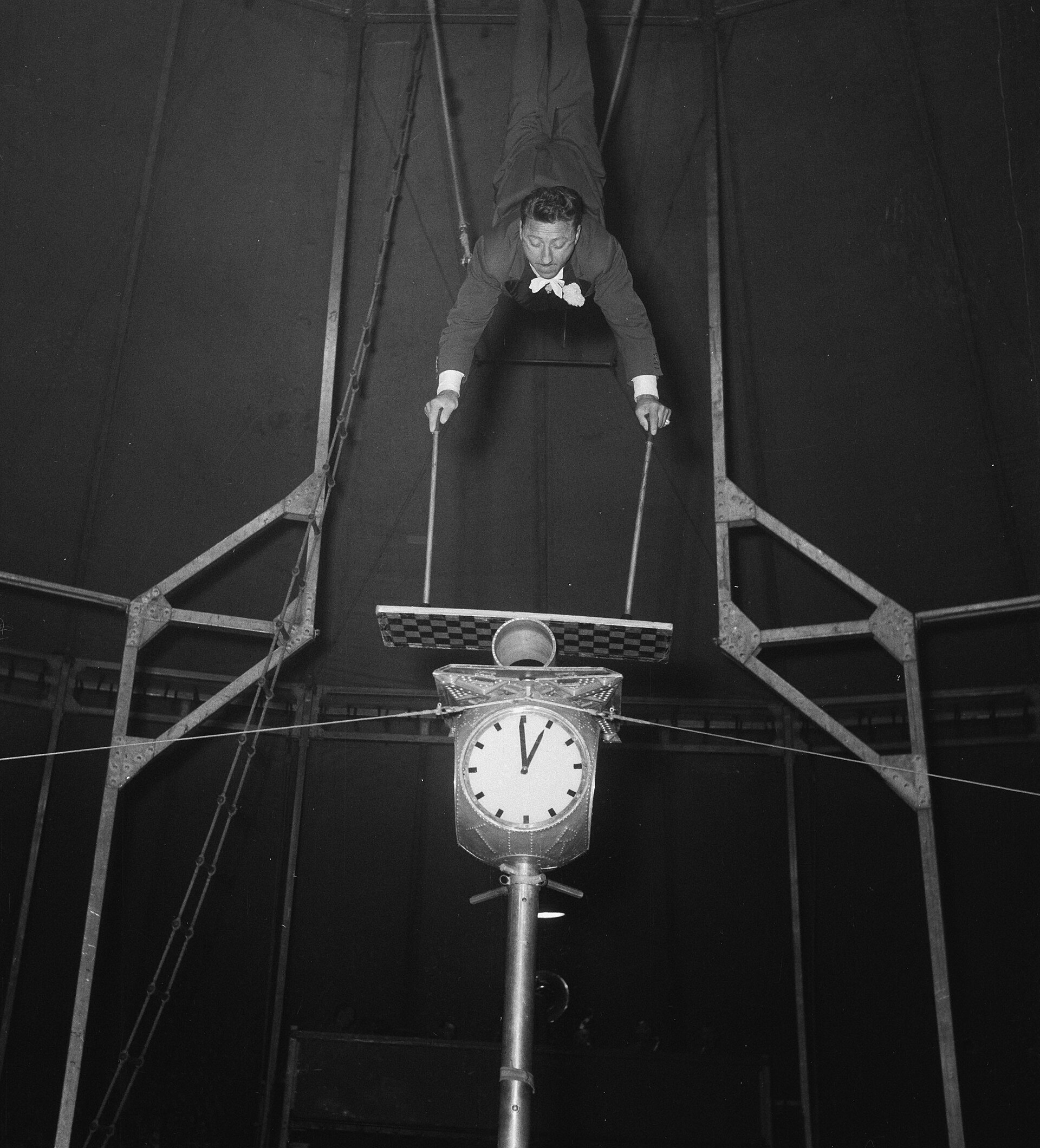
    A man balancing upside down on a stack of various items.
    Performer (1951) by Daan Noske

    All of these images are from the Natioanal Archief (the Dutch National Archives) and are under Creative Commons Public Domain dedication license.

  • Collie’s Special Delivery (1916) – Do Uneeda Biscuit?

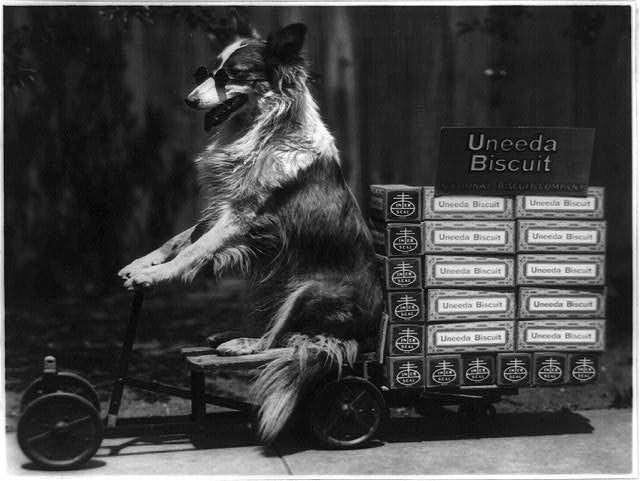
    Collie’s Special Delivery (1916) – Do Uneeda Biscuit?

    The reasons this photo caught me eye: a dog, a dog in sunglasses, a dog driving a wagon, biscuits…

    Surely if I encountered this in real life, I would purchase lots of Uneeda Biscuits from this cutie!

    A dog wearing sunglasses while posed on the seat of a wagon, the wagon is full of Uneeda Biscuit boxes.
    Collie’s Special Delivery” (1916) by Dr. E. W. Smith. Credit to the Library of Congress. Public Domain.

    Did you know?…

    A Cracker is a Hard Biscuit [1]

    The two words have often been used interchangeably throughout history.

    Uneeda Biscuit Killed The Cracker Barrel

    Before 1897, biscuits were sold in literal Cracker Barrels.

    In 1898, the National Biscuit Company(now called Nabisco) created the first moisture-proof protective cracker packaging. The first product to utilize this new invention was none other than Uneeda Biscuit! [2]

    Inspired by the idea of non-soggy and individually packaged goods, many other biscuit brands followed suit. Now, “Cracker Barrel” is only known as a quirky restaurant and gift shop.

    Sources

    [1] “Webster’s New Illustrated Dictionary…” (1911) by Noah Webster. Scanned by the Library of Congress and located on the Internet Archive. Page 271 for the definition of a cracker.

    [2] “Sixty Centuries of Progress in Biscuit Baking” (1933) by the National Biscuit Company. Credit to the University of Chicago’s Library.