
Oddical Home Page

Tag: 19th Century

  • The Royal Boat of Oude (1858)

    This fish-shaped boat, wrecked on the banks of the River Gomti, represented rebellion and political change.

    The Royal Boat of Oude belonged to the last Nawab(ruler) of Awadh to reign, Wajid Ali Shah. [1] [2] Thanks to the Indian Rebellion of 1857, his rule and his boat met their end.

    In the distance is the Chattar Manzil, a palace built by a previous Nawab, Ghazi-ud-Din Haidar Shah. It too looks worse for wear.
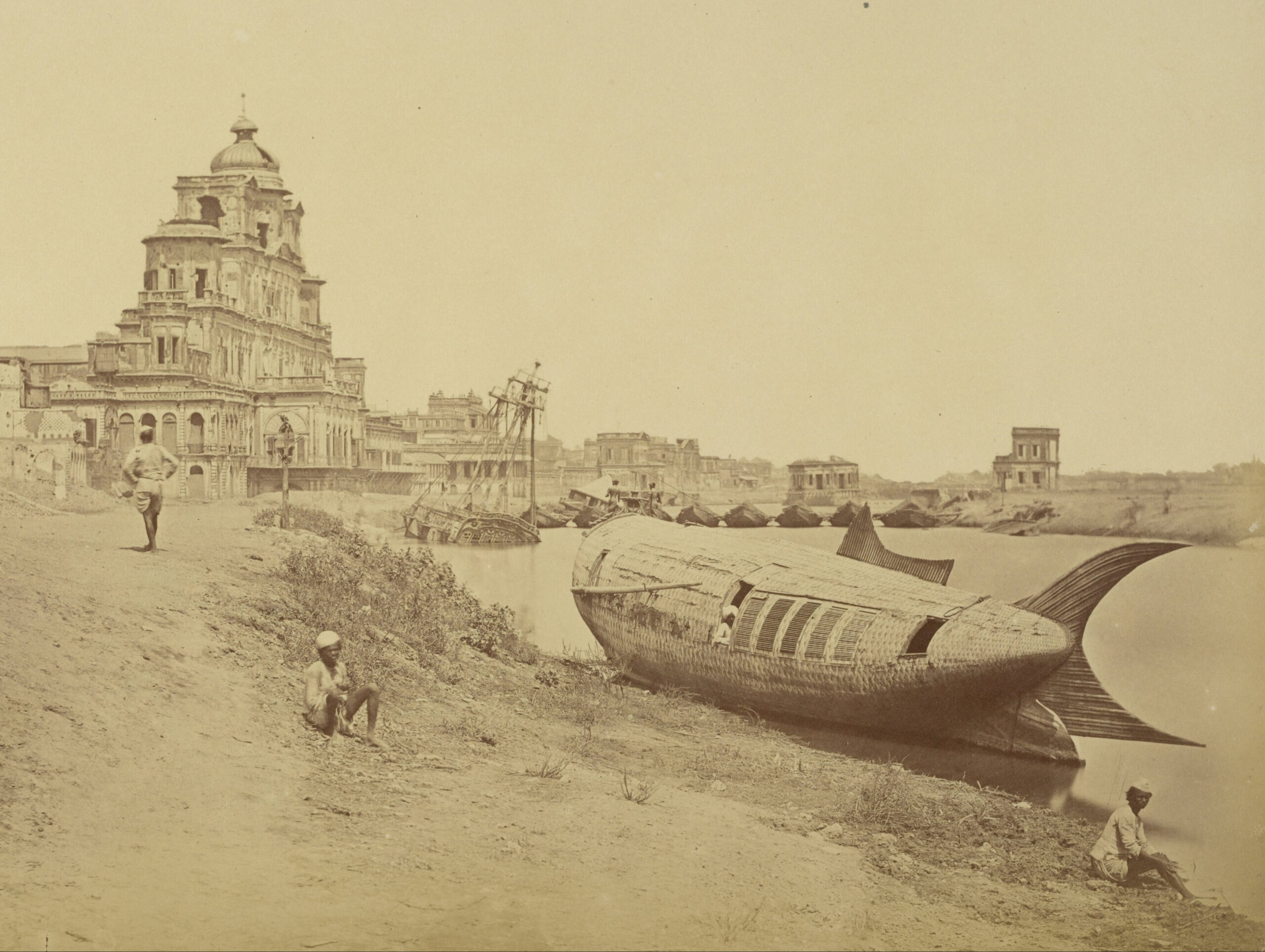
    A fish shaped boat wrecked on a river bank.
    The Chattar Manzil…” (1858) by Felice Beato. Credit: Getty Center, public domain.

    Did you know?…

    Felice Beato, the photographer of the symbolic image above, was one of the first ever war photographers. He was also one of the earliest people to take photographs in East Asia! [3]

    Here is the Getty Museum’s full collection of Beato’s works. There are over 1,400 images! I plan on featuring more in the future, so stay tuned.
    Sources

    [1] The Chatter Manzil Palace and the Royal Boat of Oude – Sarmaya

    [2] Nawab – Britannica

    [3] Felice Beato – Wikipedia

  • The Sphygmograph & Pulse Writing

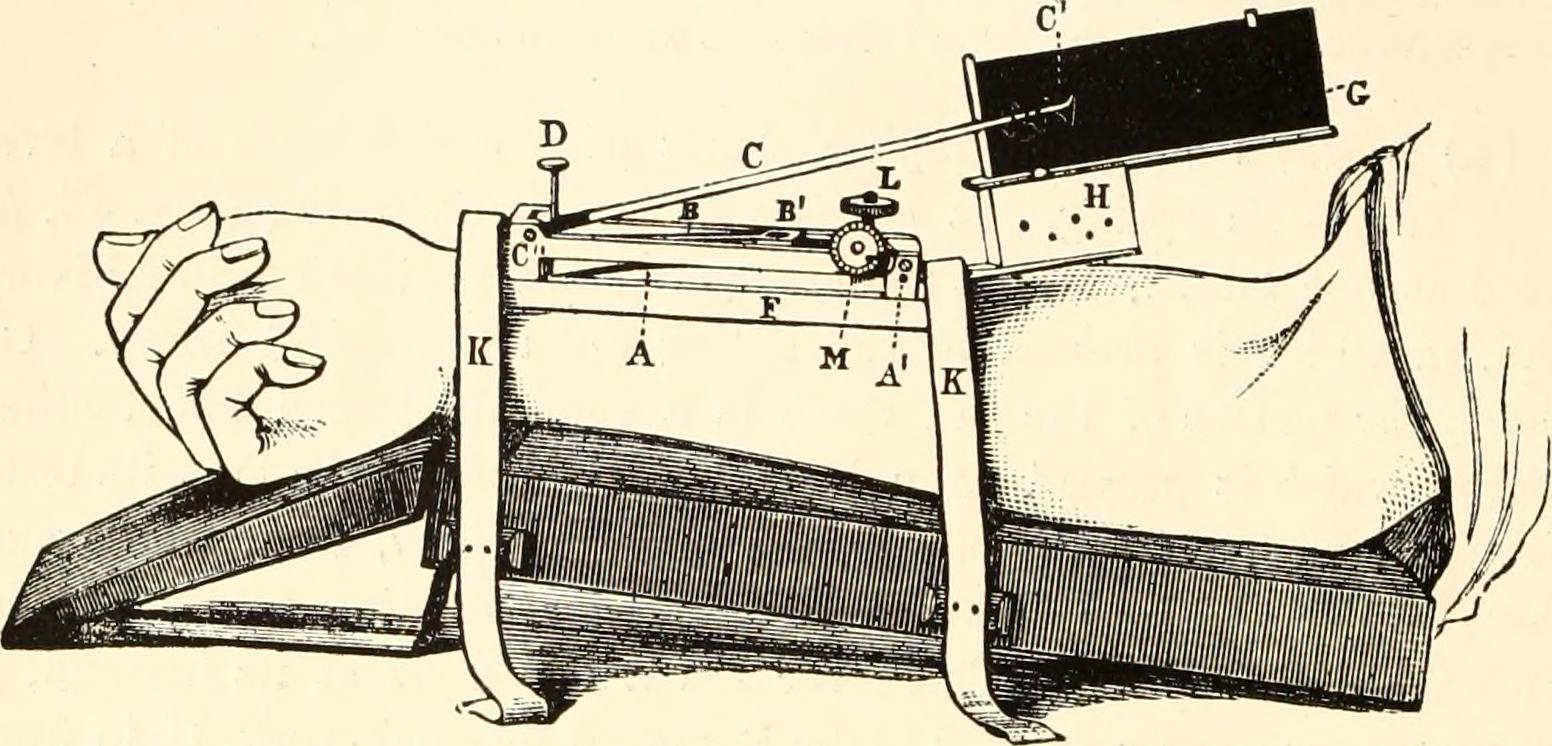
    The Sphygmorgaph is an 1800s device used to measure a person’s pulse. It would record the movements on paper, thus making it a device used in Pulse Writing. Think of it as an old-timey EKG device or the closest thing to it for its time.

    An illustration of a Sphygmograph, wrapped around a patients arm and recording the pulse on paper.
    Marey’s Sphygmograph (1885) By Byrom Bramwell, Internet Archive. Public Domain.

    Did you know?…

    Doctors have a “Tactus Eruditu” – a Learned Touch

    Before the 16th century, doctors would measure their patients’ pulse using only ‘tactus eruditu’ – a learned touch. At that point in history, there was no easy way to record or visualize the pulse, outside of the practitioner’s mind. [1]

    Pusiolgy was the First Device to Record The Pulse

    Santorio Sanctorius (1561 – 1636) invented the pusilogy, the first device to record pulse rate, though it still relied on the physician’s touch. The input for the invention was the doctor’s movement of a pendulum in reference to the pulse he felt with his fingers. [2]

    Sources

    [1] “The Sphygmograph: Its history and use as an aid to diagnosis in ordinary practice” (1882). This book is by Robert Ellis Dudgeon. Credit to the Medical Heritage Library for digitizing it and the Internet Archive for offering access.

    [2] “A Brief Journey Into the History of The Arterial Pulse” (2011) by Nima Ghasemzadeh and A Maziar Zafari. Found on PubMed Central, part of the National Library of Medicine.